Bleeding After C Section When It Has Already Stopped Then Started Again
Bleeding after vaginal delivery
After delivery, it is normal to have bleeding and vaginal discharge. This is called lochia.
During the first iii to iv days subsequently delivery, lochia will be more arable than menstrual discharge, and and then the amount volition subtract.
In addition, the color will gradually change. For three to 4 days after giving nascence, information technology volition exist brilliant red. At this time, there might be brown clots, too.
Betwixt the fifth and tenth solar day, lochia should change to pink-brown or dark-brown.
After this, the discharge will then go white or yellowish, be free of blood clots, and accept a abrupt odor. Discharge is an of import indicator of wellness, and then make sure to keep track of it.
If yous observe whatever abnormalities, consult a health intendance provider.
Take a quiz
Detect out what yous tin can do with our Health Banana
What causes haemorrhage later childbirth?
Profuse postpartum bleeding after vaginal commitment tin exist due to:
- Uterine atony. The most common crusade of postpartum hemorrhage is uterine atony. This is a condition when the uterus fails to contract after childbirth. This puts the mother at risk of postpartum hemorrhage (PPH). In fact, uterine atony is the leading crusade of postpartum bleeding.
- Laceration. Postpartum bleeding tin also happen because of uterine, cervical, or vaginal lacerations. The health intendance provider may need to practise a proper examination to dominion out laceration as the cause of PPH. A uterine rupture may also cause postpartum haemorrhage. This is something the health care provider should exist enlightened of and should cheque to find out the cause. There are several risk factors for uterine rupture, including vaginal birth after cesarean section, uterine scars, and trauma.
- Retained or trapped placenta. A retained or trapped placenta is when the placenta is non expelled from the uterus. This usually happens when the placenta partially detaches from the lining of the uterus, causing the uterus to contract improperly. The claret vessels within the uterus go along to bleed as long as there is a retained placenta in the uterus.
- Placenta accreta. This is a status when the placenta attaches too securely into the uterine wall. There are two other similar weather condition: placenta increta and placenta percreta. These three weather are differentiated by the abnormality (i.eastward., depth) of their zipper to the uterine wall. When placenta accreta occurs, it tin can crusade PPH, especially when the OB-GYN attempts to remove the placenta.
- Uterine inversion. This is a complication that tin can occur afterward childbirth when the uterus turns inside out. When this happens, symptoms such every bit postpartum bleeding, depression blood force per unit area, and intestinal pain may occur. A uterine inversion may occur if the uterus is weak or the umbilical cord is short.
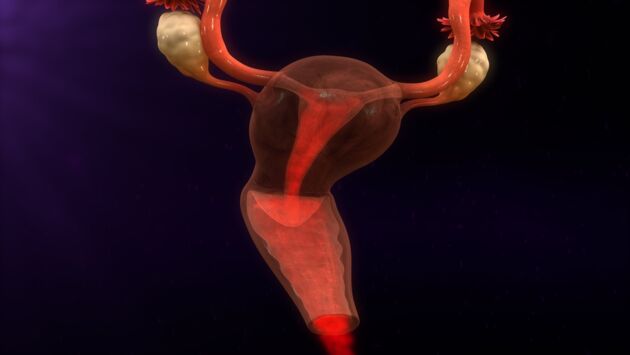
Bleeding after cesarean commitment
Mutual causes of haemorrhage after cesarean commitment include:
- Uterine trauma
- Placenta accreta
- Uterine atony
- Lacerations
Postpartum bleeding: how much claret is normal?
Later on childbirth, some haemorrhage and spotting is completely normal. And this may last for well-nigh four to six weeks.
Heavy bleeding afterwards giving birth is called postpartum hemorrhage.
According to medical experts, blood loss or postpartum haemorrhage is excessive when information technology's more than 500 milliliters of claret after vaginal nascency and more than 1,000 milliliters subsequently a C-section. This can crusade a lot of complications that tin can put overall health at risk.
It'south most probable to happen within the starting time 24 hours afterward delivery. But it tin can happen someday within the showtime several weeks later on giving birth.
Signs of abnormal postnatal bleeding
How do yous know that you take aberrant bleeding? Many people don't know that they have a heavy postpartum hemorrhage until they start to experience certain symptoms such equally weakness, nausea, rapid heart rate, and dizziness. There are other symptoms that can signal abnormal bleeding earlier these other symptoms arise:
- Haemorrhage that soaks more than 1 pad an hour
- Claret clots that seem abnormally large (bigger than a plum)
- A continuous menses that does not seem to stop
Other signs that may back-trail abnormal postnatal bleeding include:
- Depression blood force per unit area (hypotension)
- Dizziness
- Weakness
- Nausea
- Increased heart rate
- Faintness
- Blurred vision
- Chills
- Restlessness
- Rapid breathing
- Pain and swelling in the vagina and nearby area if haemorrhage is from a hematoma
Haemorrhage excessively and continuously is a major sign of abnormal postnatal bleeding. Other symptoms like increased heart rate, rapid breathing, and nausea on top of the heavy bleeding are sure signs that something is wrong. If you lot're experiencing symptoms similar this, make sure to get medical attention as soon as possible.
What is the treatment for postpartum haemorrhage?
There are several means to treat postpartum hemorrhage. The choice of treatment, nevertheless, depends on the cause and severity of the postpartum bleeding.
Some handling options for postpartum bleeding include:
Medication — Uterotonic medication is normally the starting time choice of handling for postpartum hemorrhage. Information technology helps the uterus to contract, stopping the bleeding.
Uterine massage — When a health care provider notices heavy bleeding after delivery, they may attempt to stop information technology by massaging the uterus. This helps the uterus to contract, which consequently stops the bleeding.
Airship tamponade — A uterine airship tamponade is also quite effective at stopping postpartum bleeding. A device known as a Bakri balloon is inflated inside the uterus to add pressure and cease the bleeding.
Surgery — A laparotomy is a surgical functioning that involves opening up the abdomen to determine the cause of bleeding. It is considered when less invasive interventions have failed. The surgeon performs diverse forms of pinch sutures, ligation of the uterine, ovarian or internal iliac avenue, and, equally a last resort, a hysterectomy. A hysterectomy is a surgical performance to remove the uterus.
Claret transfusion — This method involves intravenously adding new blood to the body to replace lost blood.
Uterine artery embolization — With this method, a radiologist conducts special tests to make up one's mind which blood vessel is bleeding. The radiologist then injects pocket-sized particles into the vessel to stop the bleeding.
Uterine curettage — This method involves removing remaining pieces of the placenta from the uterus either manually or using special tools.
Consult a health care provider to determine on the all-time treatment option for you. Abnormal postpartum bleeding may be a potentially life-threatening status. Inform your health care provider immediately if you have these symptoms.
Getting back to normal

During postpartum recovery, it is important to avoid any kind of strenuous action or exercise, peculiarly after a postpartum hemorrhage. Information technology is recommended to go lots of rest.
Too, watch what y'all are eating and drinking. Eat foods that are rich in iron, such as:
- Dark green leafy veggies such as spinach
- Pumpkin seeds, nuts, and chickpeas
- Lentils
- Beans and peas
- Red meat and seafood
When the body loses blood, information technology tries to replenish information technology. With continuous haemorrhage, the body may quickly not take plenty iron to effectively form hemoglobin. This is known as iron deficiency anemia. This is why it is important to eat a nutrition rich in iron.
It is equally of import to add foods rich in vitamin C to your nutrition as information technology helps the body to absorb atomic number 26. Foods rich in calcium may have a short-term negative result on iron absorption, and then it's amend to limit their intake.
Also, add loftier-fiber foods to your diet like whole grains and fruits to avoid constipation.
Lastly, accept intendance of your mental health and well-being. Many people who accept had postpartum bleeding often experience postpartum depression. If yous feel postpartum low, talk to your health care provider or a mental health professional, or join a support group of people who take had a similar feel. Support can exist helpful for recovery, both physically and mentally.
The Flo period tracker is a great way to keep runway of periods, either to rail fertility or simply to monitor health. It does more assistance y'all continue rails of your monthly cycle. It too provides information about preventing period-related symptoms and managing certain health conditions such as polycystic ovary syndrome and premenstrual dysphoric disorder.
Source: https://flo.health/being-a-mom/recovering-from-birth/postpartum-problems/abnormal-postpartum-bleeding
0 Response to "Bleeding After C Section When It Has Already Stopped Then Started Again"
Post a Comment