drawing a 3d perspective landscape
15 Ways to Draw the Illusion of Depth
Updated: 21 February 2022
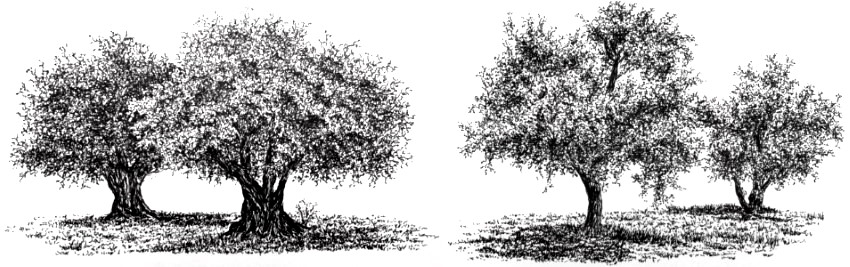
When drawing in a realistic style, it is helpful to draw from direct observation, or past using reference images.
Still, for an initial sketch, or when drawing from imagination, there are several proven methods to create the illusion of depth.
one. Volume
Unlike apartment objects, 3D objects appear to have book, and therefore indicate depth.
A three-dimensional object has highlighted and shadow areas, depending on the location of the light source.
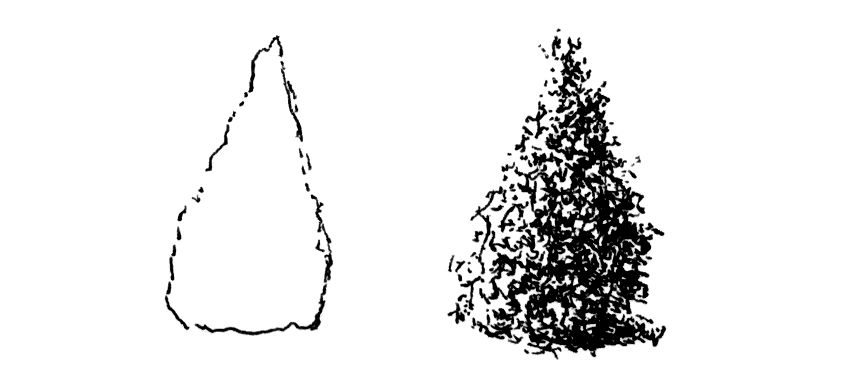 Flat vs 3D object with volume
Example:
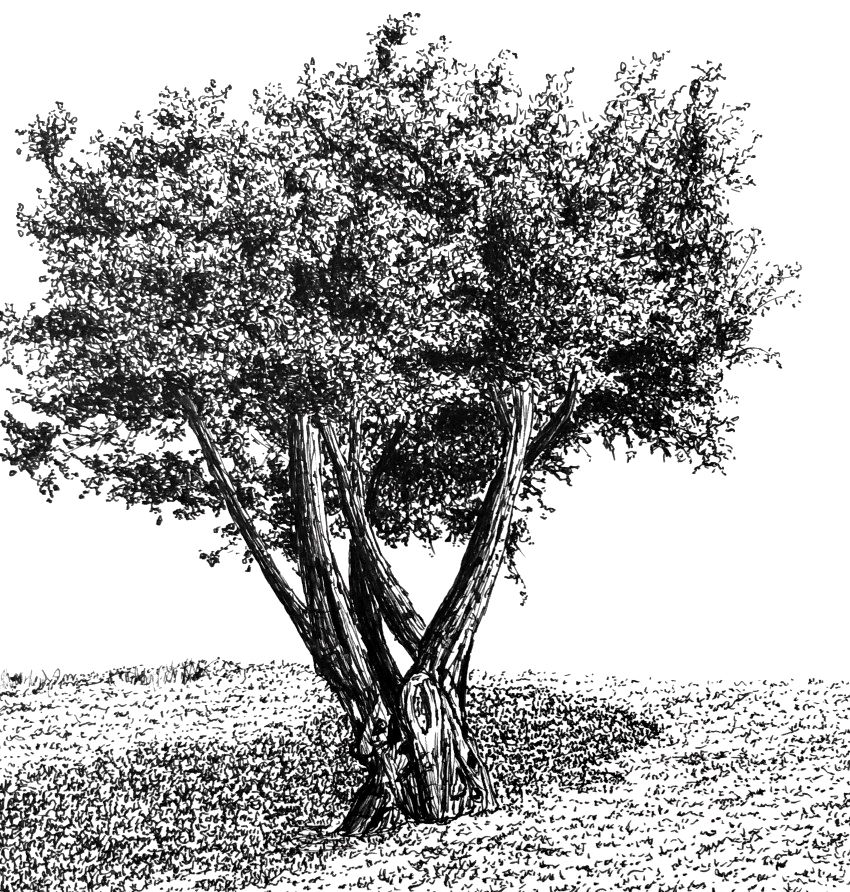 Pen and ink olive tree
2. Size
According to the rules of perspective, the farther an object is, the smaller it looks.
For that reason, when y'all describe similar objects in different sizes, the observer can conclude that smaller objects are farther away, thus create a sense of depth.
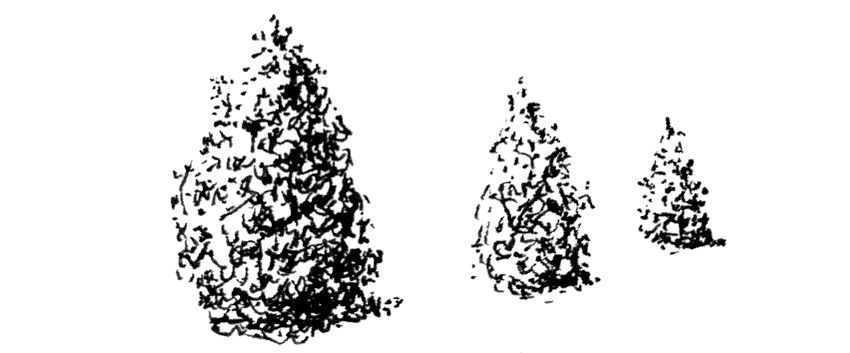 Objects with dissimilar size
Instance:
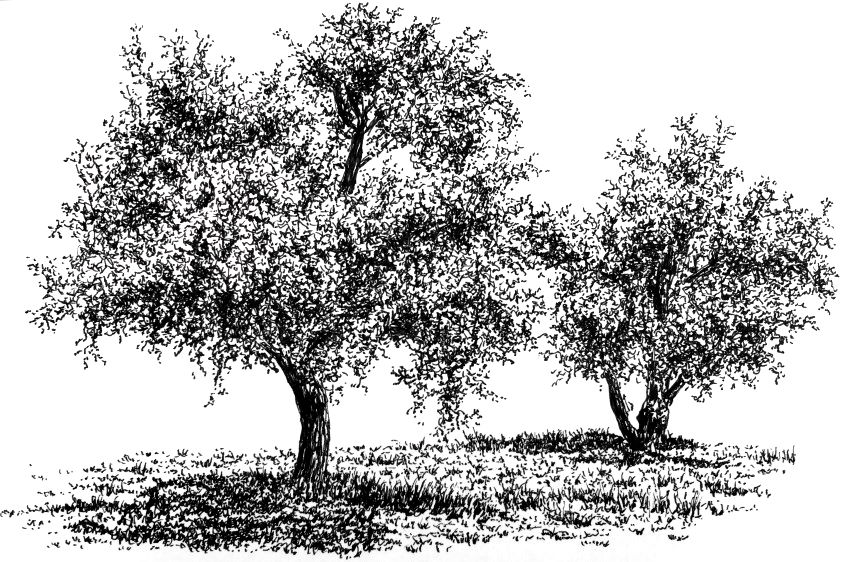 Pen and ink olive trees
In addition, y'all tin use size to create a sense of infinite.
Calculation a small object to a divers space, makes it wait big:
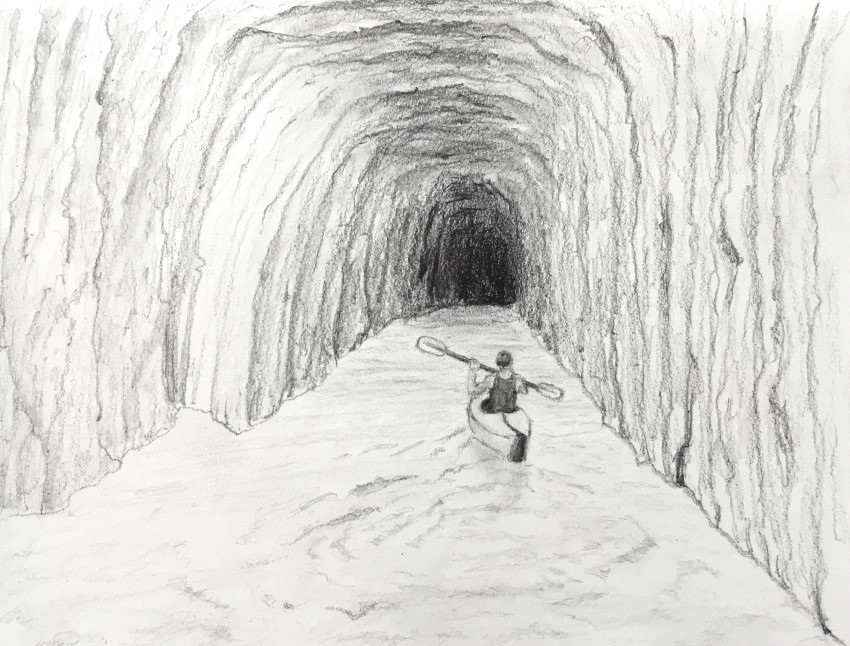 Minor object defines large space
Adding a large object to the same infinite, makes it look small:
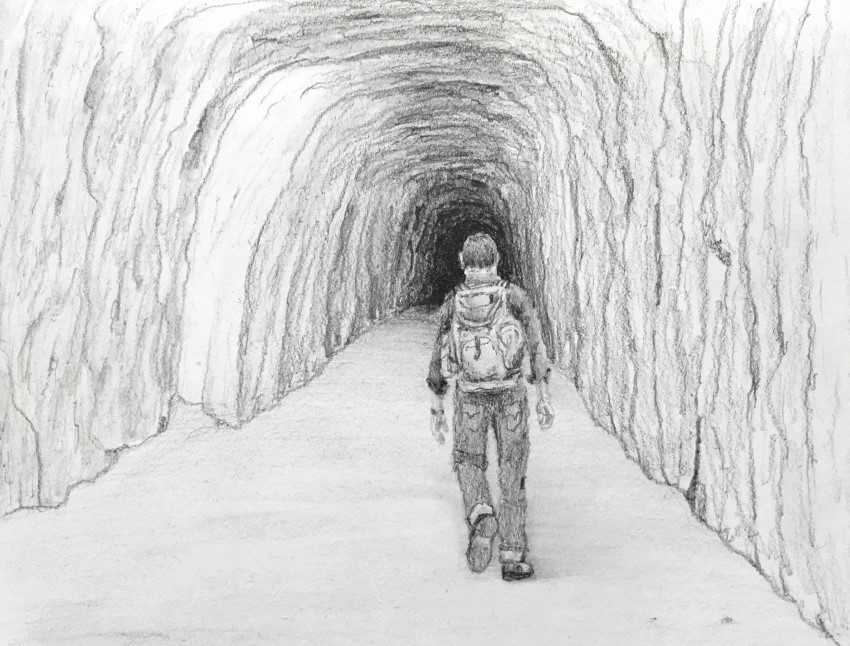 Big object defines small space
3. Overlapping
A body concealing office of another body indicates that the body information technology is hiding is farther away.
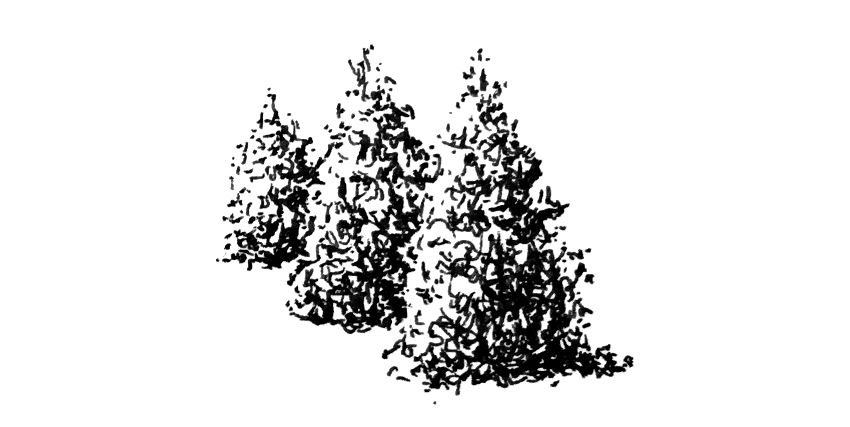 Overlapping objects
Overlapping is a powerful method to add depth!
Example:
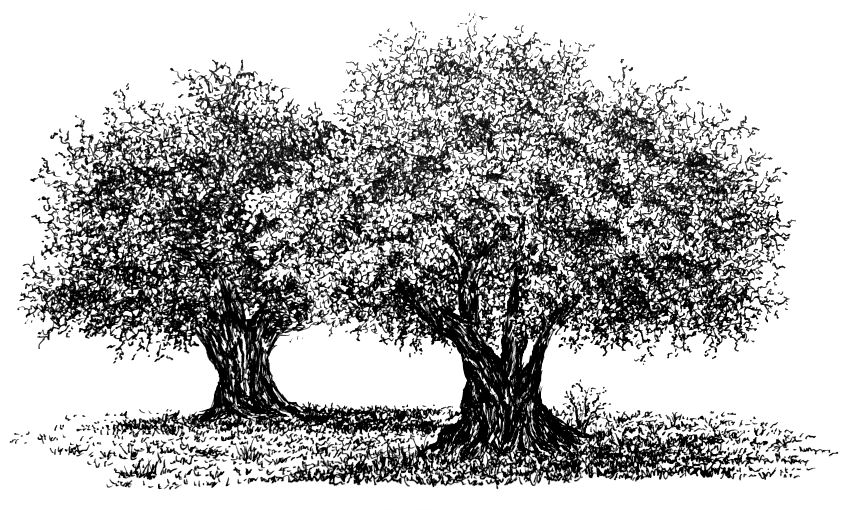 Overlapping olive trees
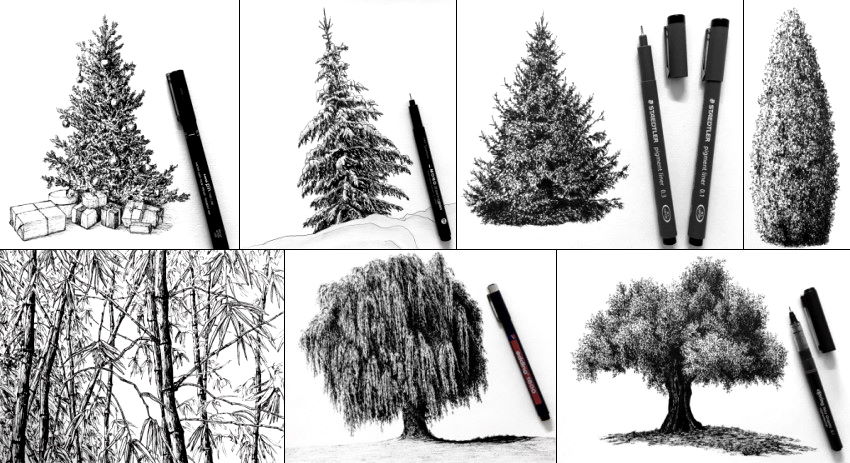
If you like my tree drawings, you are welcome to visit my guide on how to draw Any tree with a pen.
4. Position/Height
When the base of objects is positioned higher on the cartoon surface, they look farther away.
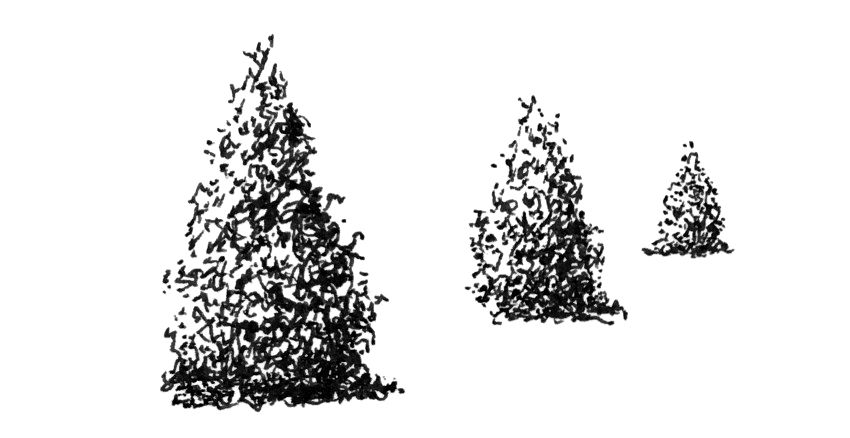 Different positioning
In almost cases, the base of operations of closer objects is lower on the drawing surface, AND the superlative part of shut objects is higher than far objects.
Note:
This happens when the horizon is placed in the middle (more on that afterward).
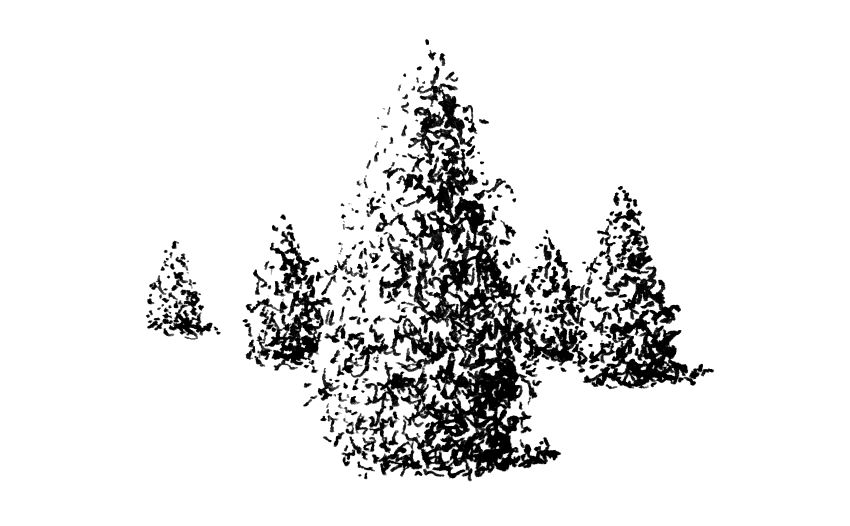 Closer object position & superlative
The reason is the observer's visual angle, pregnant non measuring in meters but in degrees, in perspective.
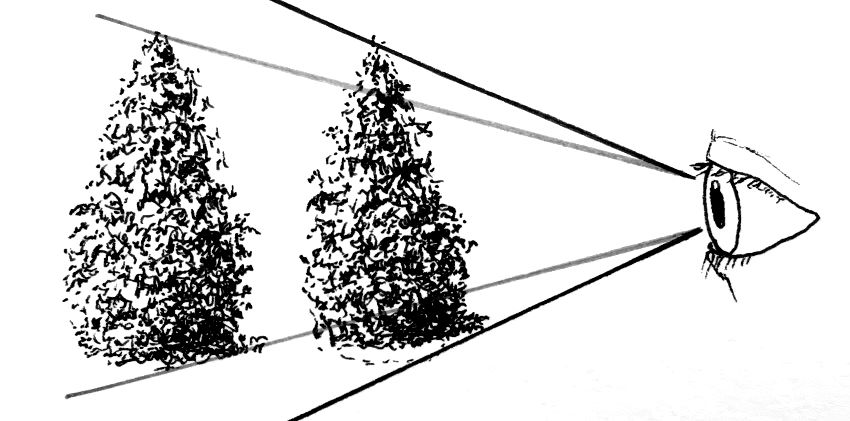 Observer angle of sight
Recollect:
There is no actual depth in a cartoon; the newspaper sheet is flat. Therefore, utilise peak to decide the illusion of depth.
Instance:
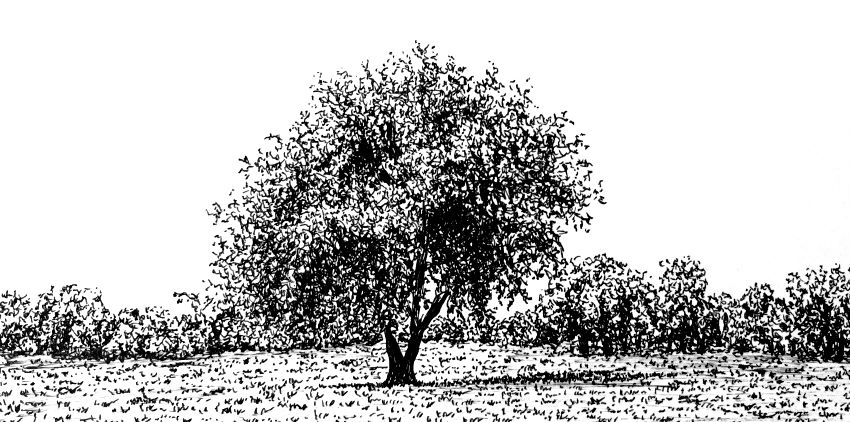 Tree position
When looking from above, the top part of closer objects is lower on the cartoon surface.
 View from above
Here is my review of recommended technical pens for drawing.
five. Contrast & Details
The dissimilarity between the dark and light areas decreases, as does the amount of details, every bit an object is further away.
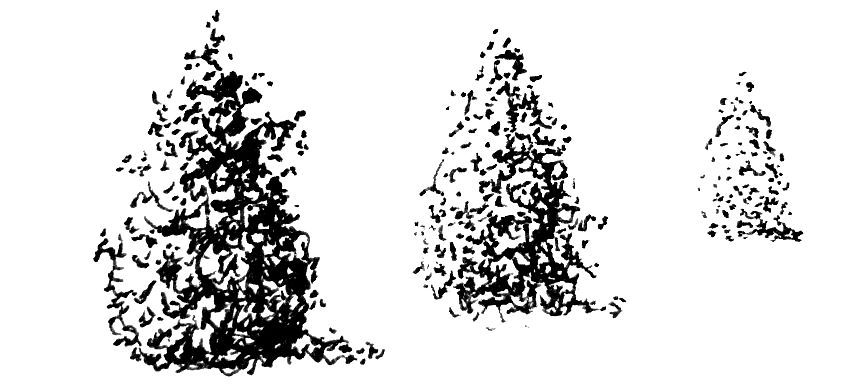 Decreasing levels of contrast & details
That is to say, when drawing or painting, areas with high dissimilarity come forward, and areas with less contrast recede.
Case:
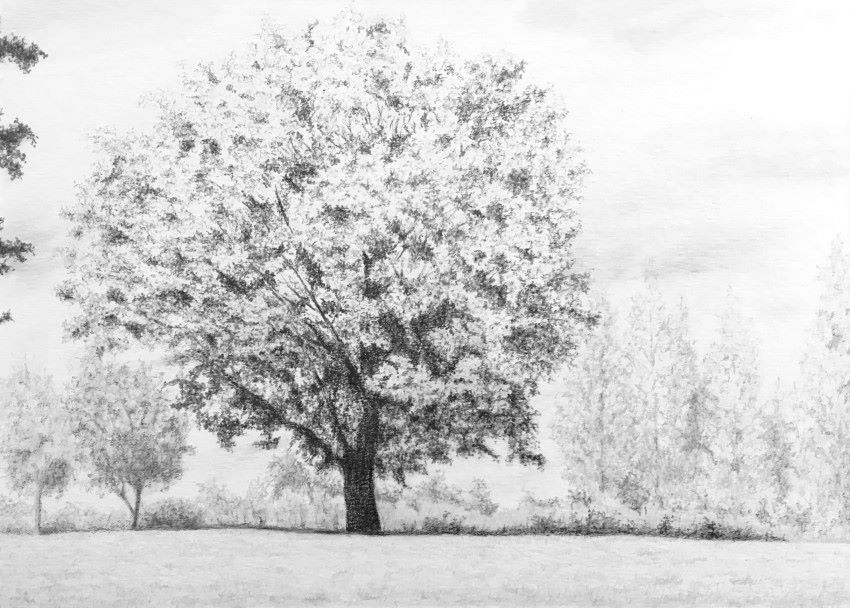 Trees pencil drawing
vi. Edges
When an object or surface ends in a sharp way, it means it has a difficult border.
Soft edges are when objects stop in a gradual manner, from nighttime to light.
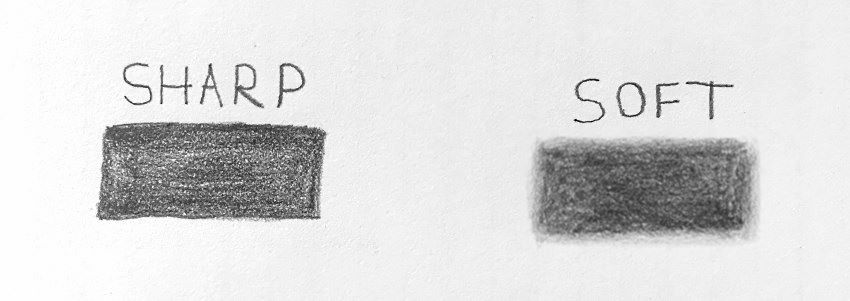 Hard/sharp vs soft edges
Foreground objects take hard edges, and therefore in focus.
Background objects have soft edges, and therefore blurry.
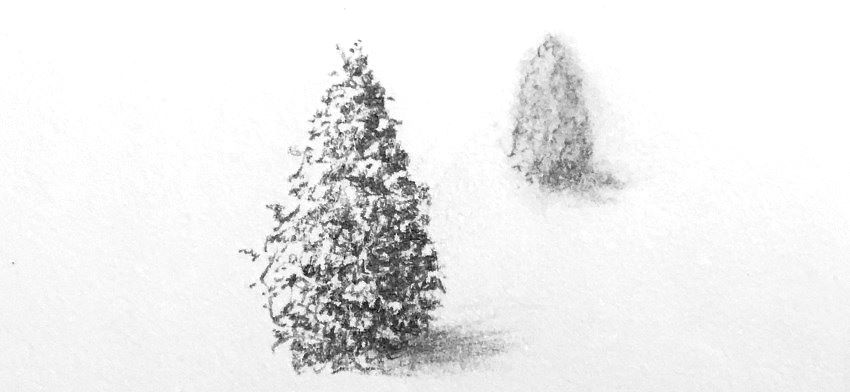 Background objects have soft edges
This happens due to atmospheric perspective.
Significant, with altitude, at that place are more than atmosphere (air) particles between the observer and the object.
These particles besprinkle light. That is why distant objects look blurry, and with fewer details and dissimilarity.
7. Horizon
Dividing your drawing into ground and heaven by a horizon line, mountain range, vegetation, or any other way, attests to depth.
In add-on, past adding footing, the objects terminate "hovering".
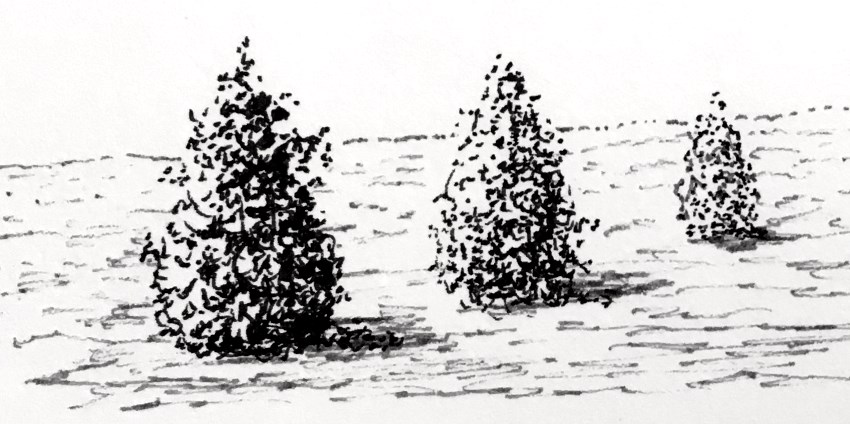 Horizon and footing
Pencil cartoon example:
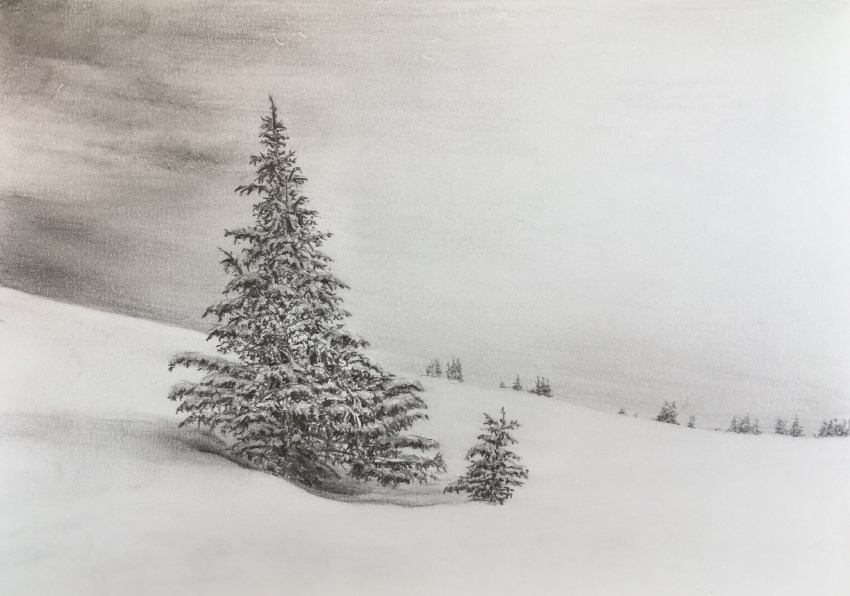 Snowy horizon & pine tree
Remember:
Your drawing surface is apartment! You lot have no depth, only width and height.
Every bit objects are closer to the horizon, they announced farther away.
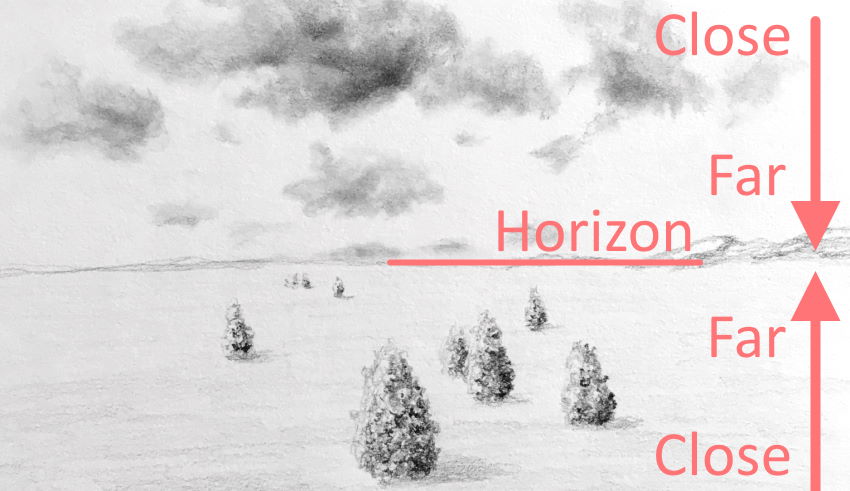 Pinnacle every bit a mensurate of distance
In the prototype above, copse that are higher on the drawing surface (toward the horizon) look farther away.
Clouds that are lower on the drawing surface (toward the horizon) look farther abroad.
For a listing of equipment that I use for drawing, visit my guide for pencil drawing materials.
8. Perspective
Past using linear perspective, it is possible to demonstrate depth in a realistic fashion.
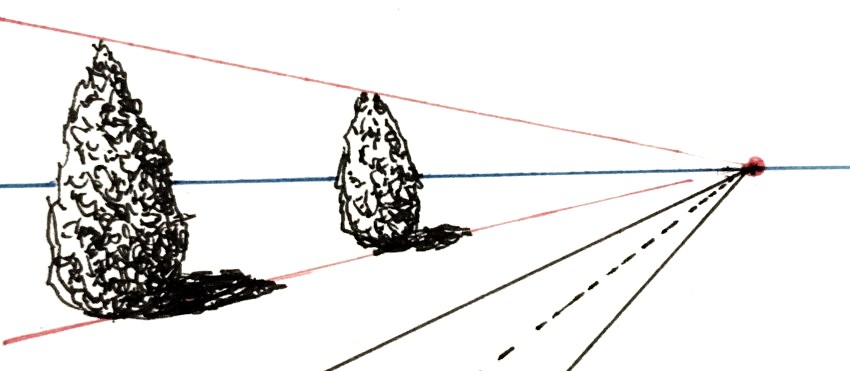 Linear perspective
Case:
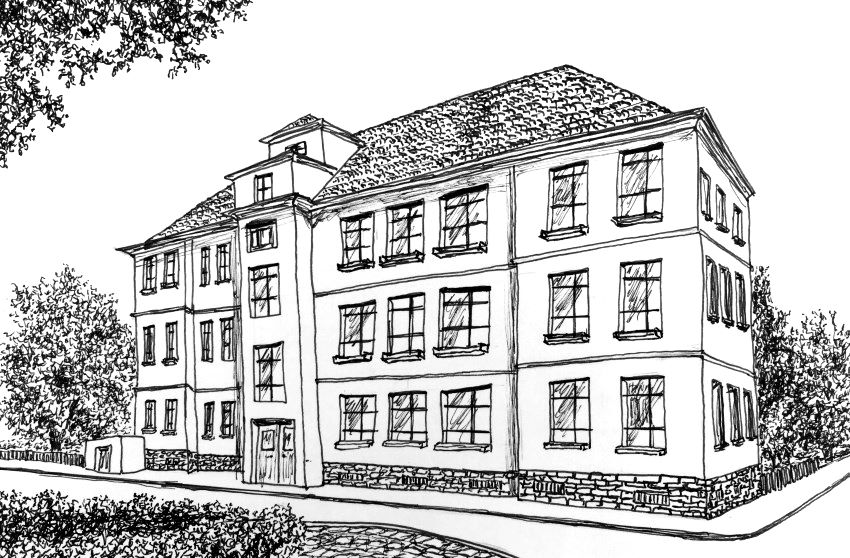 House sketch in perspective
If you are new to linear perspective, read my linear perspective guide, it is an important drawing fundamental.
9. Foreshortening
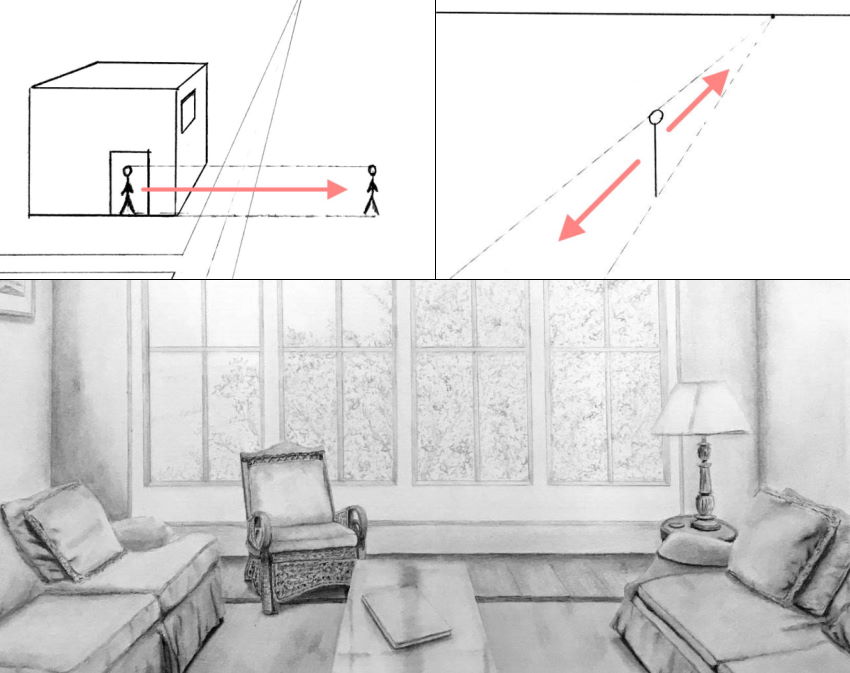
Objects in front of the viewer, such every bit buildings, trees, mountains, people, etc., look smaller as they are farther abroad, but maintain the ratio betwixt height and width. This means that there is no distortion.
On the other mitt, when you change the object (or your) angle of sight, and the object is now along the line of sight, it gets shorter in that direction.
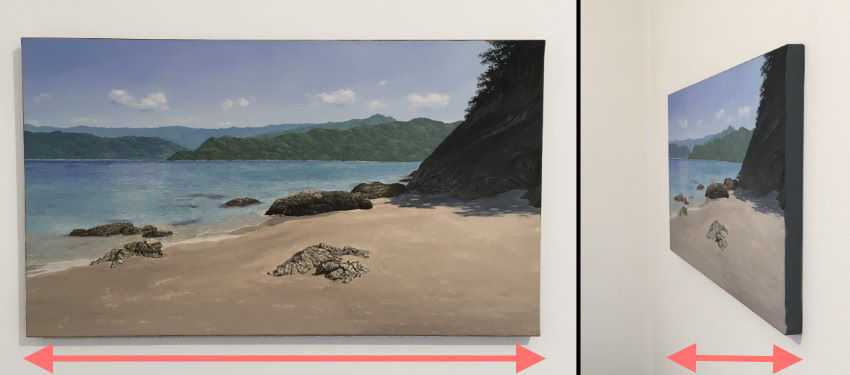 Foreshortened oil painting
This baloney is due to the angle of sight. The more an object is in your direction of sight, the more than it is distorted (becomes much shorter in that direction).
For instance, a lake that in reality can exist round, in perspective becomes more elliptical every bit the distance betwixt it and the observer grows.
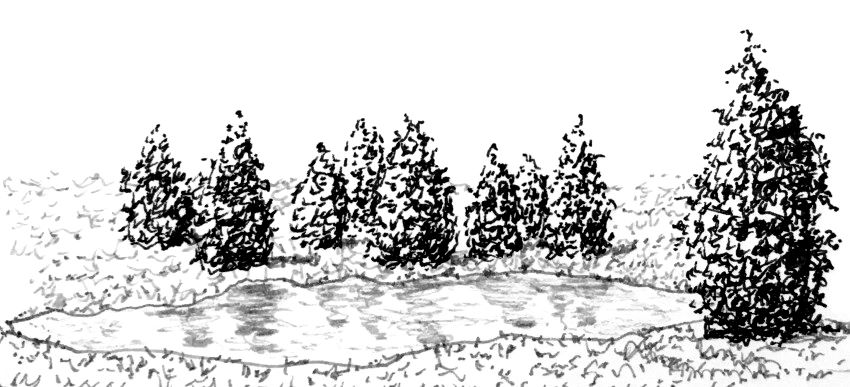 Foreshortened lake
Note:
Bandage shadows are subject to foreshortening (unless they are in front of the observer).
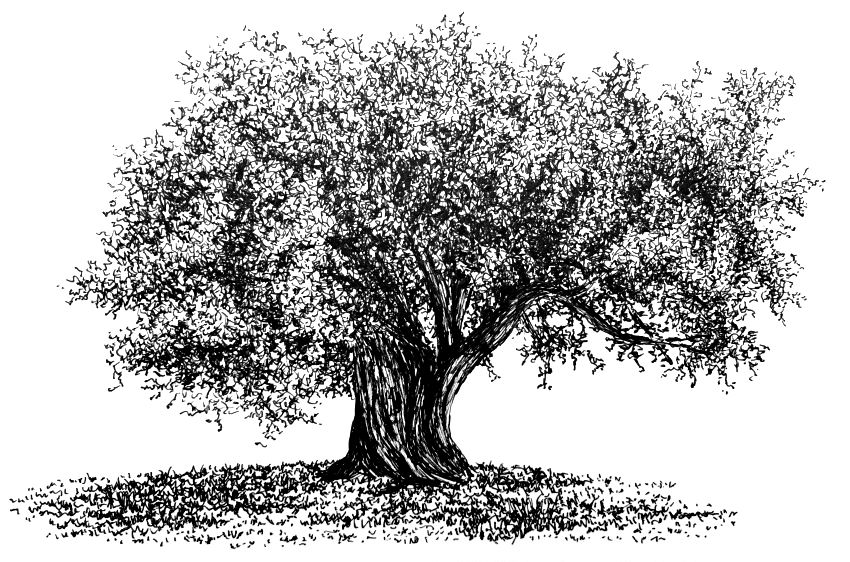 Bandage shadow foreshortening
Understanding foreshortening is THE cardinal reward of experienced artists, specially when drawing from imagination.
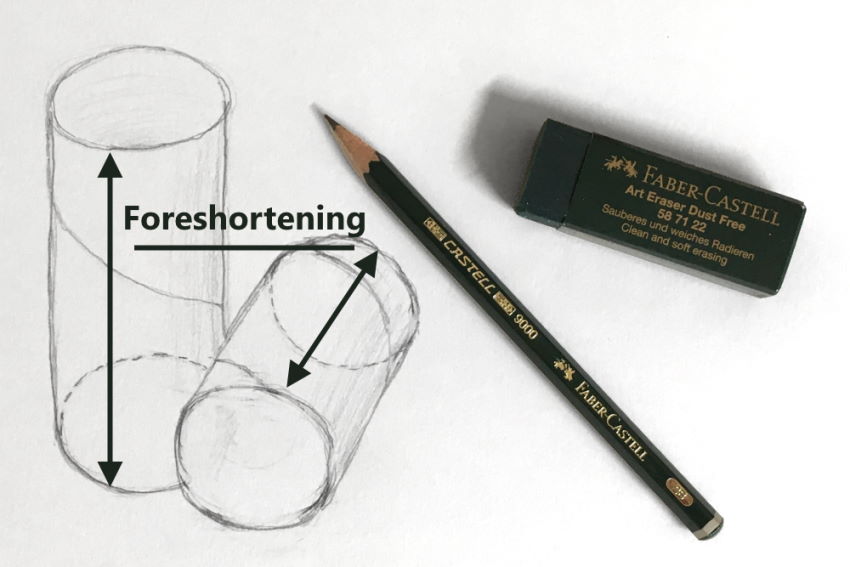 Foreshortened cylinder
Once your sketch is correct, it is prepare for rendering.
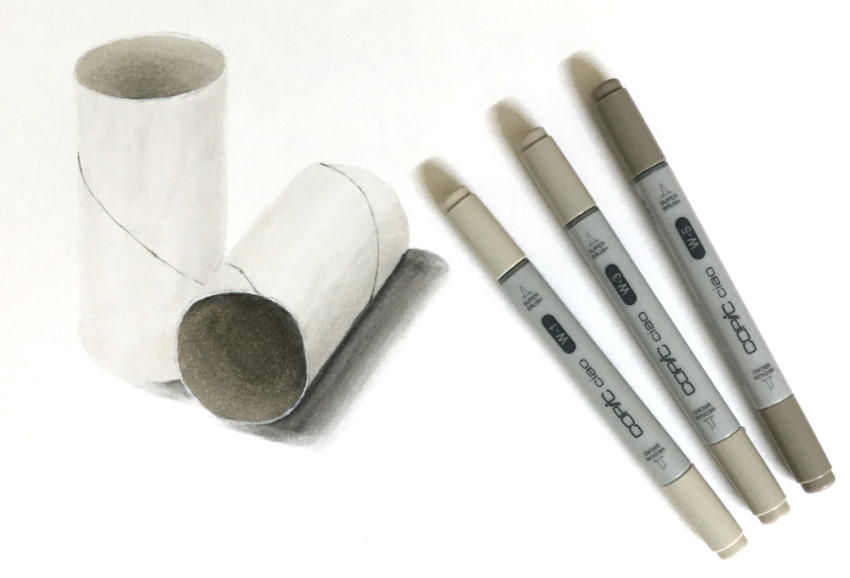 Coloring with markers
If you are new to foreshortening, visit my guide on cartoon from imagination (It is an avant-garde guide, only explained stride-past-pace).
10. Colors
Co-ordinate to the rules of atmospheric perspective, the further an object is, the more its colour (hue) shifts toward the background color, which is commonly blue heaven.
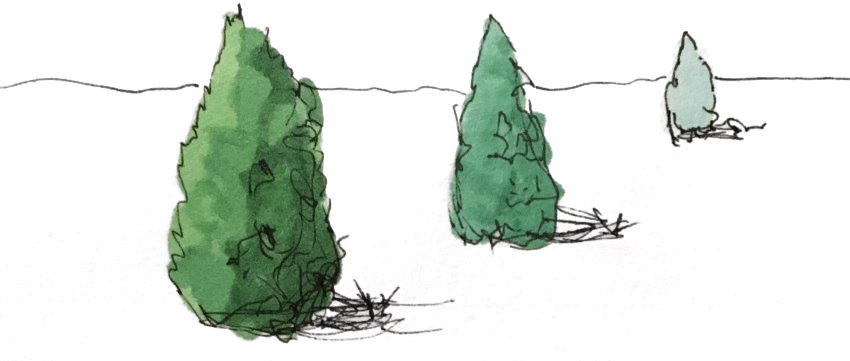 Greenish slightly shifts to blueish
11. Saturation
The further an object is, the less saturated its colour is.
In other words, its color is less rich, bright, or intense, therefore becoming boring or neutral.
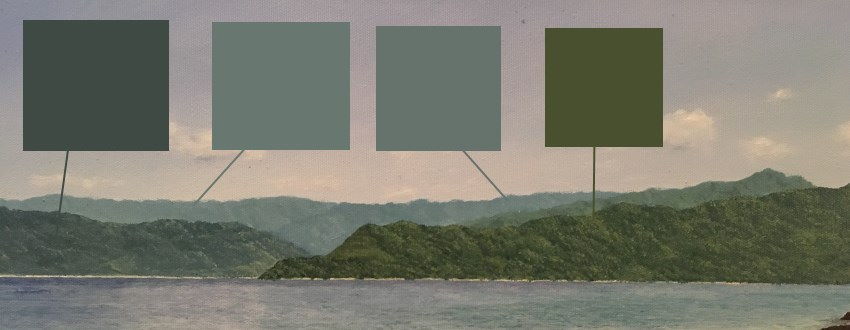 Far objects are dull or grayish
Case:
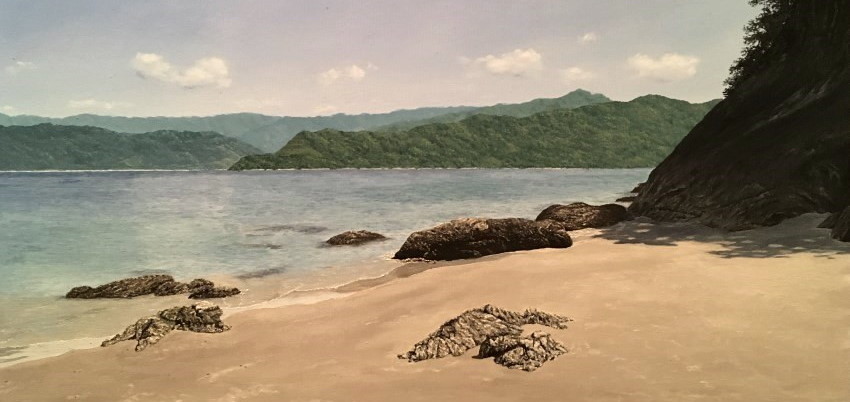 Seashore oil painting
12. Temperature
Regal, blue and green are absurd colors; they bring to heed the ocean, and other absurd things.
Red, orange and yellow are warm colors; they bring to mind fire, or other warm things.
The farther abroad an object is, in that location are more than atmosphere particles betwixt it and the observer, i.due east. the atmosphere color has a bigger upshot.
When the sky is blue, the color of background objects shifts gradually toward a blue hue due to scattered calorie-free, and therefore becomes libation.
Foreground objects are warmer than the background objects since in that location are less atmosphere particles between the observer and the foreground objects.
Opposite miracle may occur in sunrise or dusk.
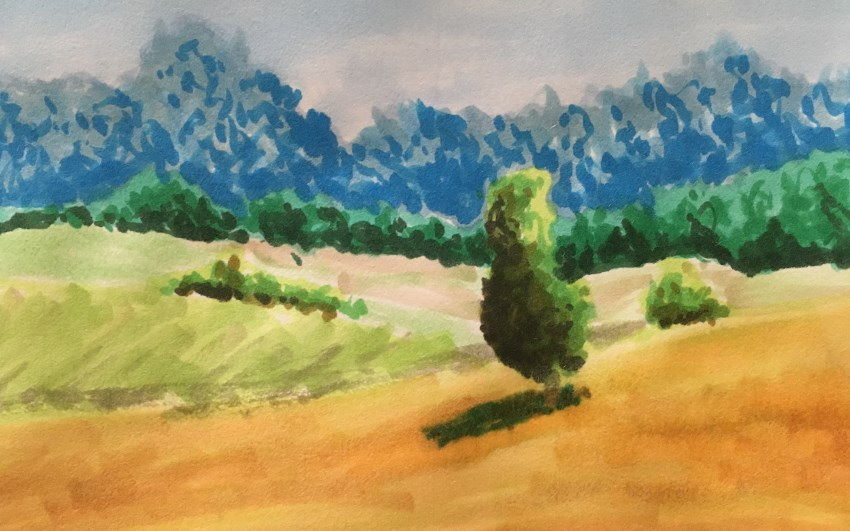 Temperature in landscape
For a review of markers I use for cartoon, visit my markers guide.
thirteen. Values
According to atmospheric perspective, farther objects have higher brightness values, pregnant their color is lighter.
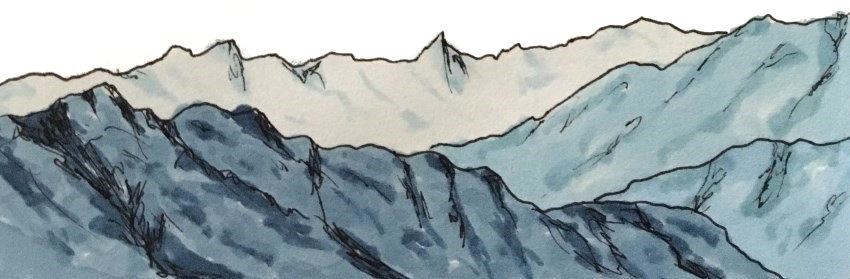 Further object is lighter
For monochromatic drawing, like pencil drawing, the same principle applies.
The central is to press harder with a drawing pencil for darker values, or to use pencils with unlike effulgence values.
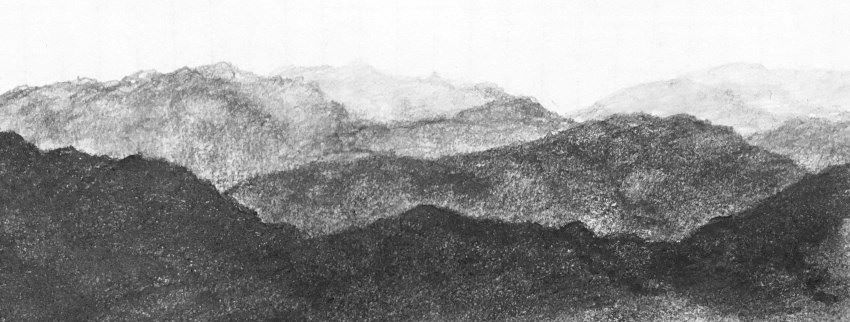 Foreground objects are darker
In addition, transitions (slope) in brightness values tin exist used to create the illusion of depth.
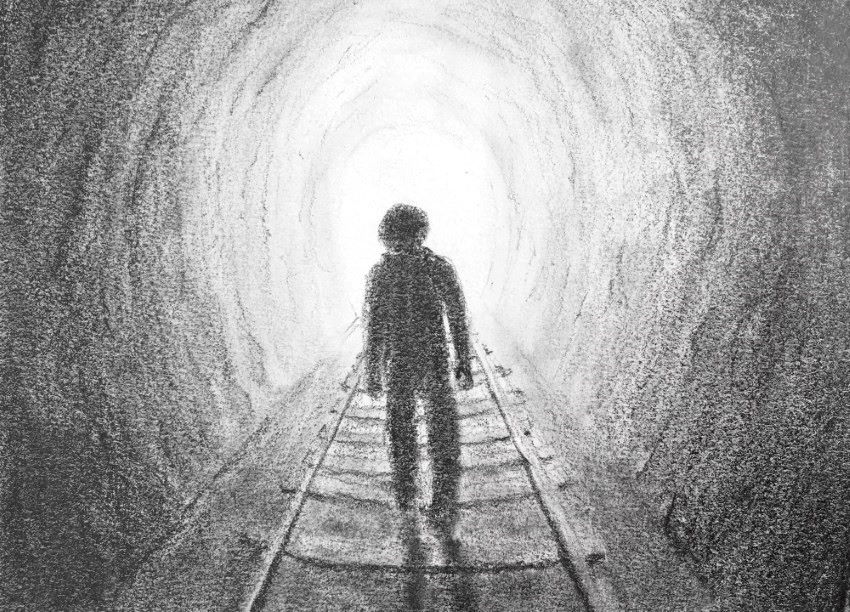 Transition from dark to low-cal
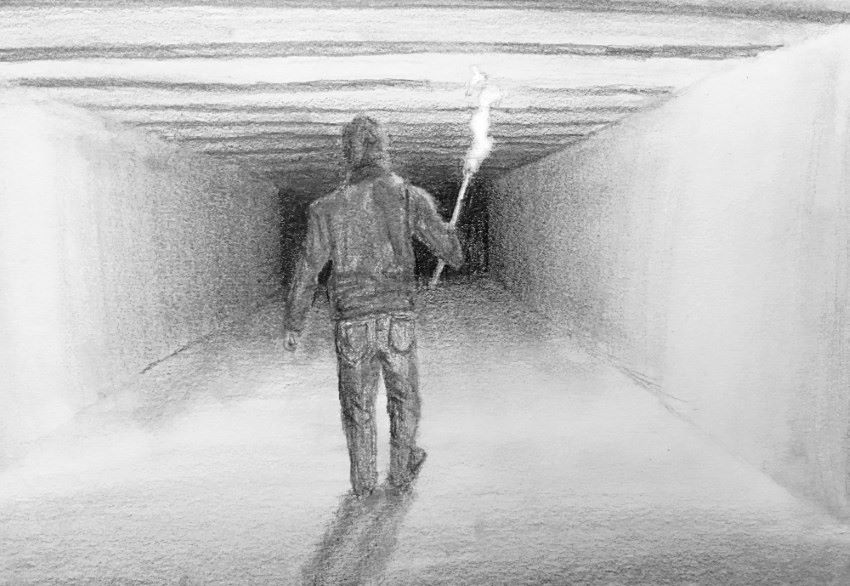 Transition from light to dark
fourteen. Cast Shadow
It is important to draw or paint cast shadows when necessary, and to adjust their direction to the opposite side of the light source.
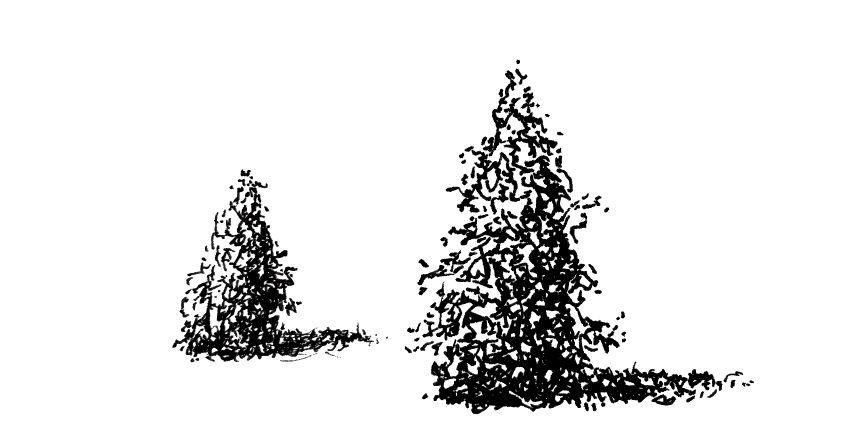 Cast shadow
Example:
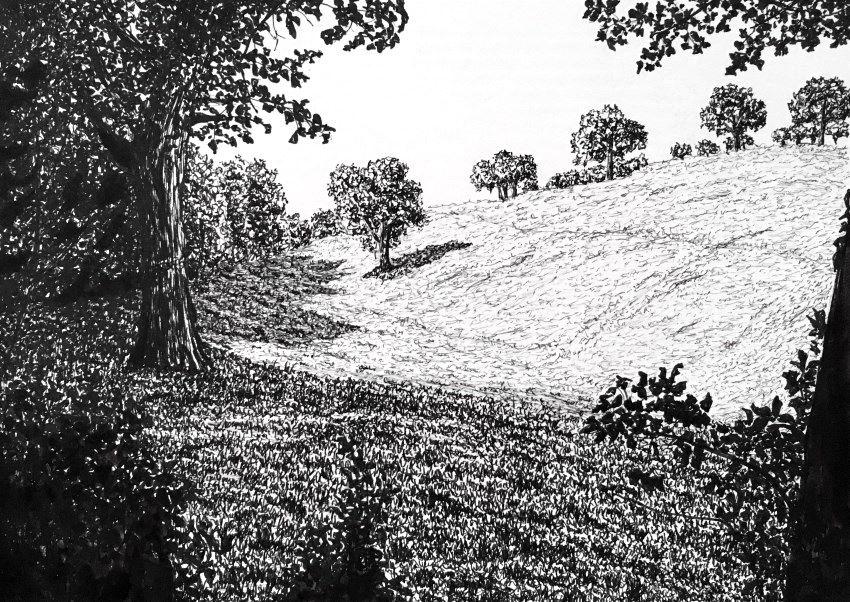 Landscape with pen & ink
In social club to learn how to etch a scene and return it, read my tutorial on composition drawing.
fifteen. Brushstrokes & Marks
Some painting styles are done with a drove of single brushstrokes. For instance, painting grass blades or leaves.
In these cases, use larger paintbrushes for foreground strokes.
You can do the same with a technical pen.
Use a pen with a bigger beak size for bigger marks when cartoon foreground objects, and a smaller nib size for background objects.
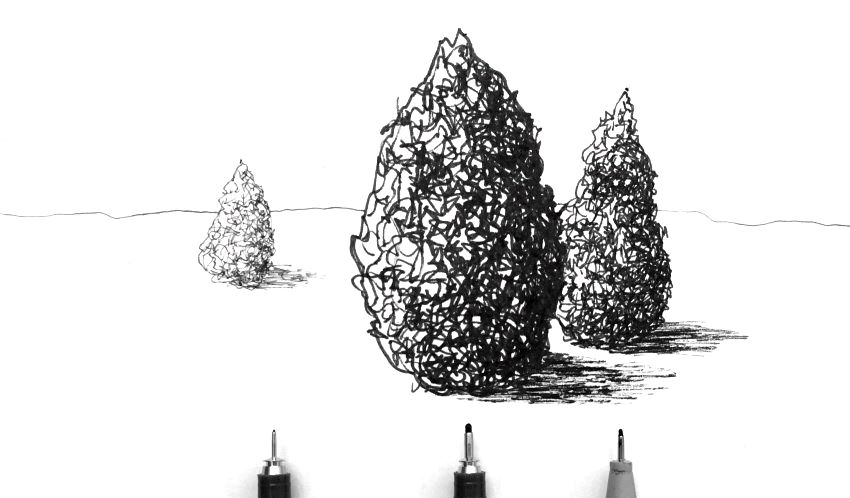 Unlike bill sizes
Example:
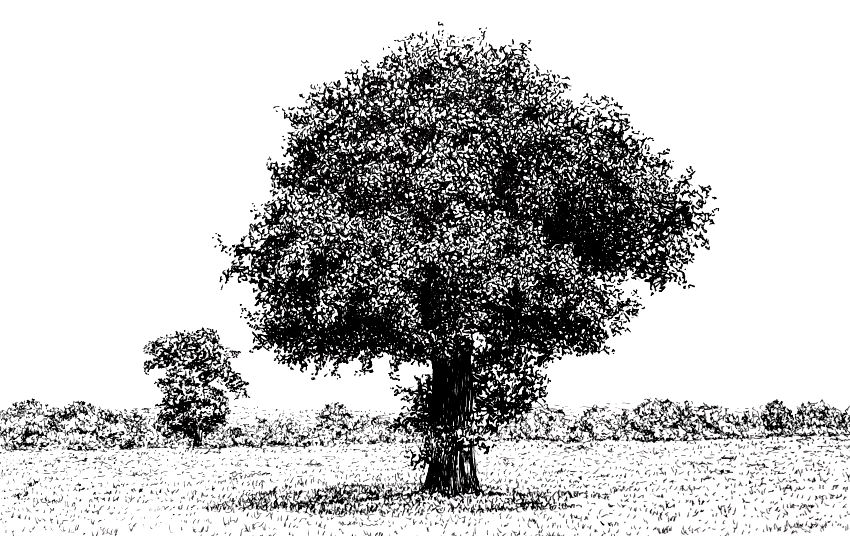
For an initial sketch, the management of lines/marks or brushstrokes is important.
Same basic shape with different marks direction tells a different story:
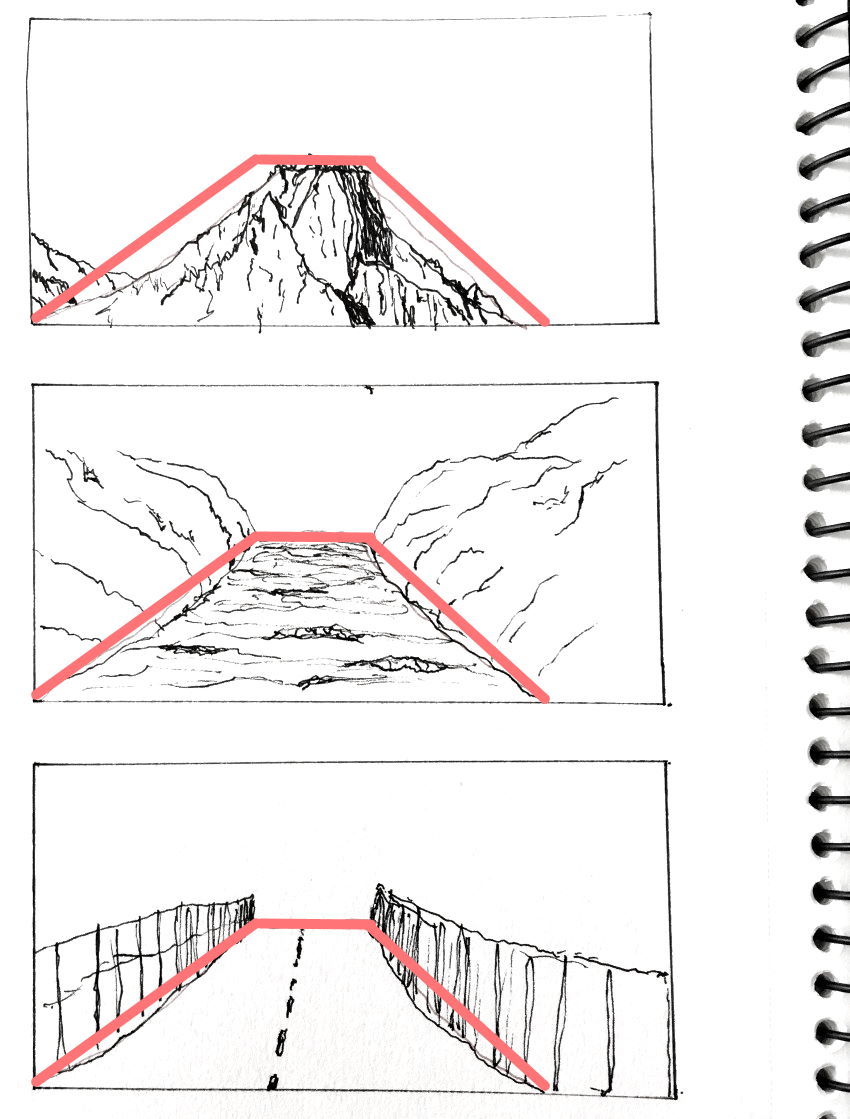 Marks direction for creating shapes and depth
When planning a painting, the direction of marks play a major role:
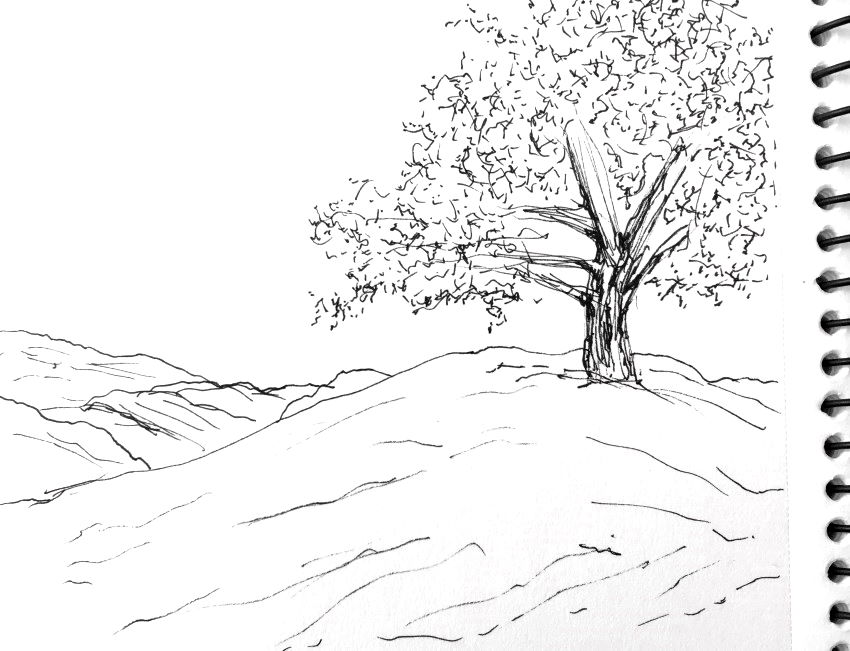 Marks every bit first step
And, they are necessary when painting.
Example:
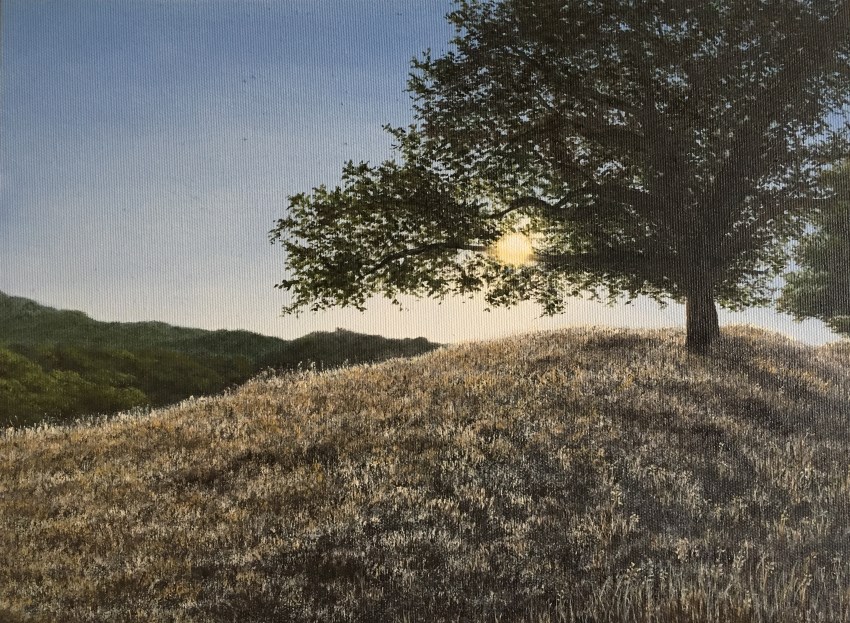 Tree in sunset oil painting
If yous are new to oil painting, it is practiced to know the unlike types of paintbrushes for oil painting.
Summary
The key to create depth when cartoon is the utilize of different methods to produce a iii-dimensional wait on a ii-dimensional surface.
Just put, at that place is no actual depth in drawing (or painting), but an illusion of depth.
Colors:
When using colors, pay attention to colour attributes such as hue, saturation, value, and temperature.
In a monochromatic drawing, correct brightness values are crucial.
Mural vs still life:
For mural painting, it is beneficial to sympathize linear and atmospheric perspective.
When painting a still life, utilize methods like contrast, overlap, and soft edges, to create depth.
Where to go next?
After understanding depth, you might want to visit my beginners guide to realistic pencil drawing.
And, larn about the eight key factors for painting realism.
If you like cartoon with pens, here is my flower drawing guide.


Copyright © RanArtBlog.com. All Rights Reserved. | Sitemap
Source: https://ranartblog.com/blogarticle20.html
0 Response to "drawing a 3d perspective landscape"
Post a Comment